

Services
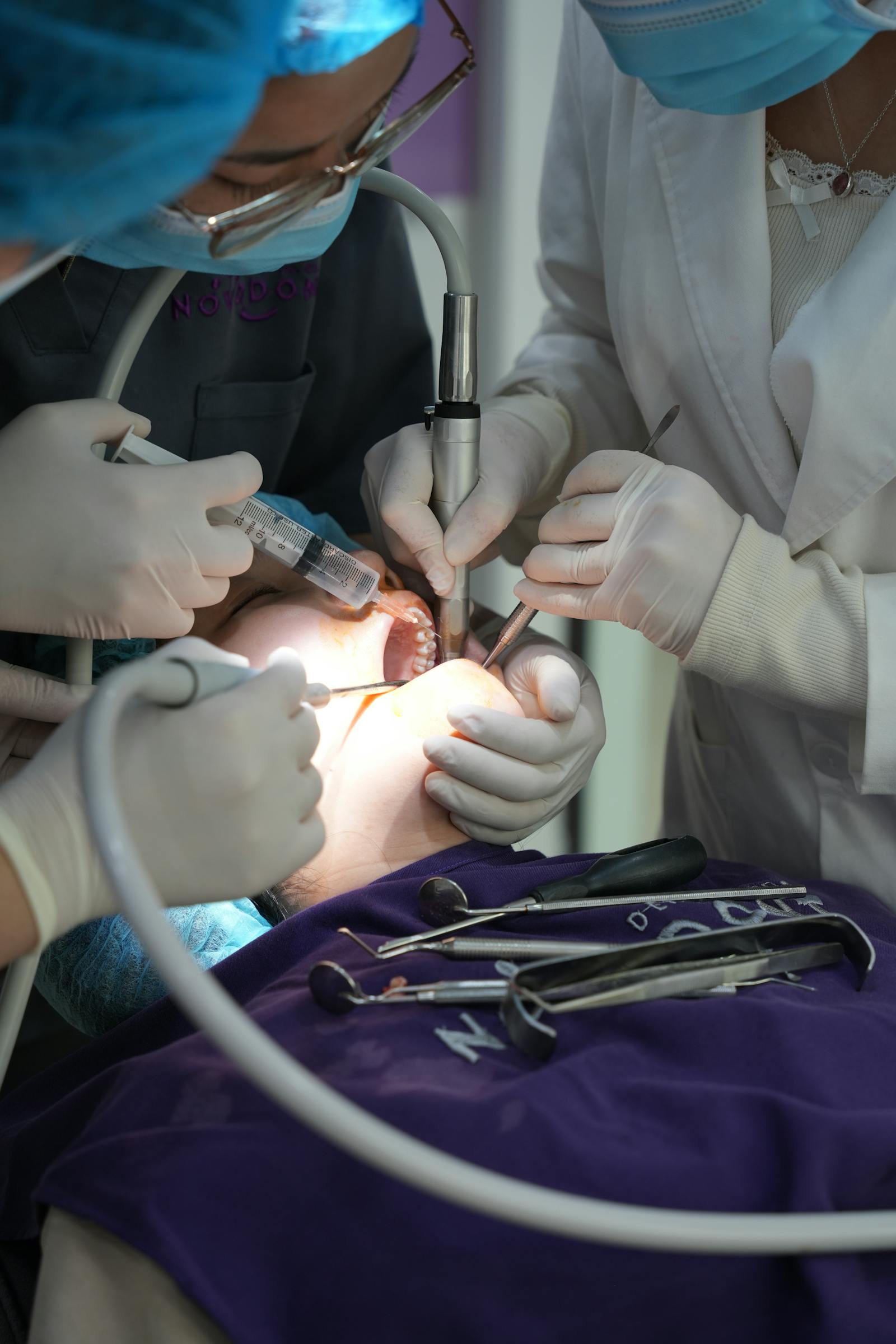
Alveolar ridge expansion (ridge split) is a modern surgical procedure performed when the alveolar ridge is too narrow (3–4 mm wide) for implant placement. After tooth loss, alveolar bone resorbs first in width — this can reduce the minimum width needed for an implant (6 mm) to zero. Compared with classic block-bone grafting, ridge split is less invasive and delivers results faster. Modern piezoelectric equipment (Mectron, NSK) is the key to this procedure: high-frequency ultrasonic waves cut bone precisely and in a controlled way without damaging soft tissues or nerves. Treatment protocol: precise CBCT planning first — ridge width and height, cortical/cancellous ratio, position of the inferior alveolar nerve. Under local anaesthesia a mucoperiosteal flap is raised, and piezosurgery is used to cut the ridge vertically and carefully expand it. The created space is filled with xenogeneic or allogeneic bone material. In many cases the implant is placed at the same time — significantly shortening overall treatment and avoiding a second surgery. A collagen membrane (GBR — Guided Bone Regeneration) is placed on top and the wound is closed with aesthetic sutures. The procedure takes 60–90 minutes. After 4–6 months of bone integration the implant is restored prosthetically. Success rate is 90–95%.